
Air Duct Cleaning: Repair or Replace? How Bustleton Homeowners Decide
Most Bustleton homeowners assume the repair-or-replace question hinges on how old their ductwork is. It usually doesn’t. The decision comes down to three things an inspector can measure on-site: what the ducts are made of, how deep the contamination goes, and whether the existing layout actually delivers air where the house needs it. Cleaning a system built with deteriorating fiberboard liner or crushed flex that’s lost much of its cross-section wastes money on ducts that physically can’t perform. In Bustleton’s older housing stock, both conditions turn up in homes that look perfectly fine from the outside. Here’s the framework we use to sort it out before anyone accepts a cleaning quote.
If you’d rather have trained eyes on it than guess, call (833) 509-5322. We answer 24/7.
What are the three duct materials in Bustleton homes, and how do they fail?
Bustleton ductwork generally falls into three material categories, and each one fails in its own way. Knowing which you have tells you more about repair-versus-replace than the build date on your deed.
- Galvanized sheet metal. The most durable option. Seams and joints loosen over time, and that’s where leaks start, but the metal itself can last decades. Most sheet metal problems are fixable with sealing and reconnecting.
- Flexible vinyl or mylar. Common in retrofit and addition work. Flex duct crushes easily, sags on long runs, and the inner liner can tear or collect debris at every sag. A crushed flex run is one of the most common airflow killers we find.
- Ductboard (fiberglass board). Popular in the 1970s and 1980s. The interior surface can fray as the binder ages, and once the liner starts breaking down, particles shed into the airstream. Ductboard that’s deteriorating on the inside usually can’t be cleaned back to a sound surface.
The pattern matters here: the older the housing stock, the higher the odds of running into ductboard or aging flex. Bustleton has a significant pre-1980 inventory, so the probability of encountering fiberboard and crushed flex is higher than in newer subdivisions. That’s the practical reason the inspection-first approach makes sense in this neighborhood.
Why does a video inspection come before any cleaning quote?
A camera inspection separates surface contamination from structural failure, and only one of those is cleanable. That’s the whole reason we don’t quote blind.
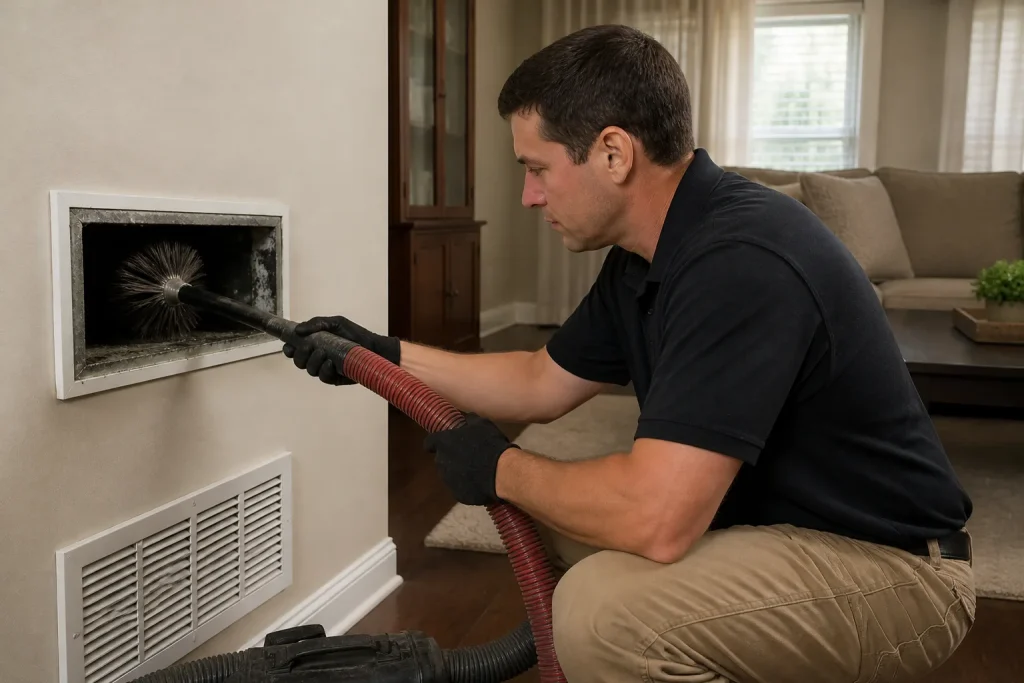
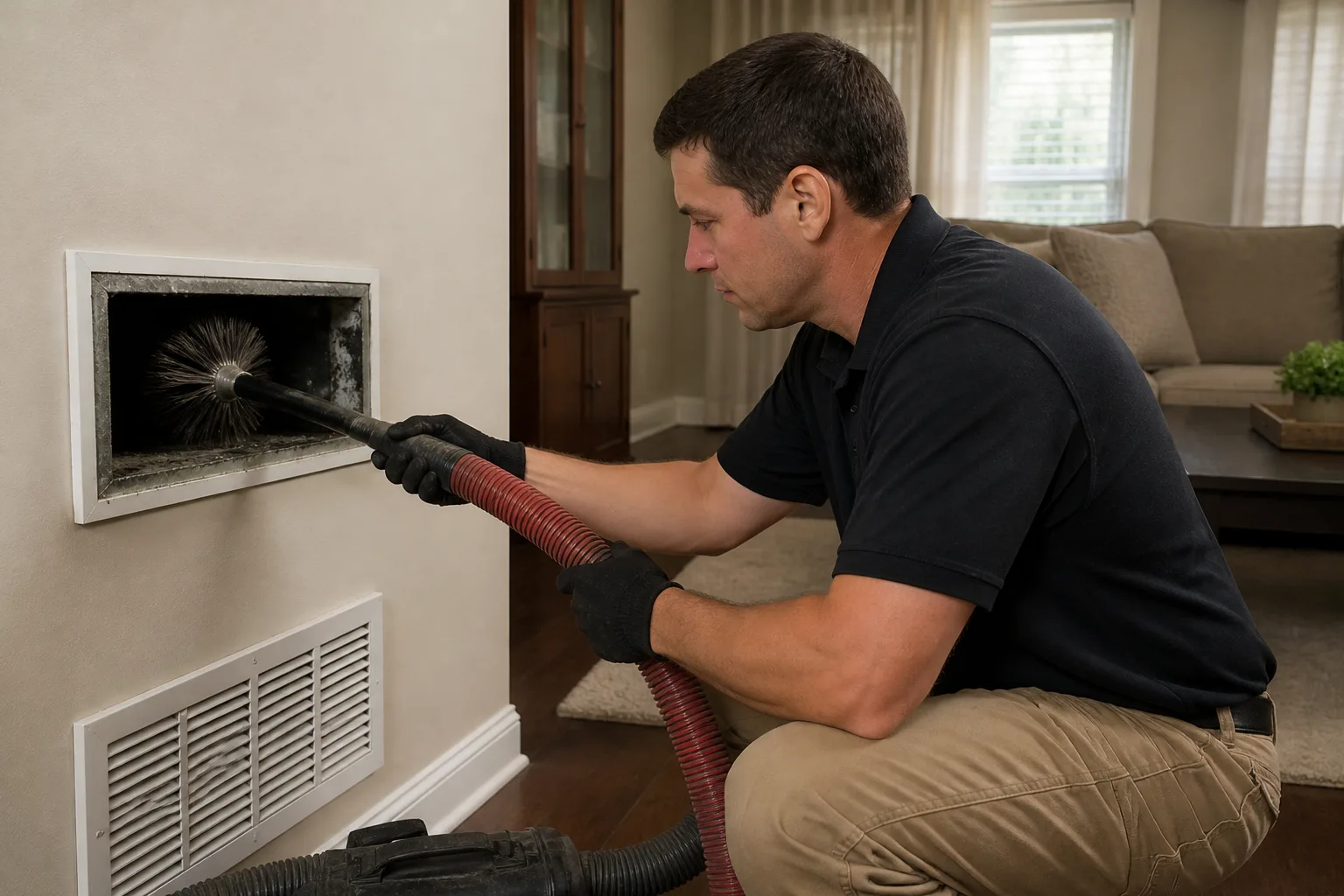
Surface-level dust, pet hair, and light debris sit on top of an intact duct wall. Mechanical cleaning handles that with proper equipment – we run air duct cleaning using Rotobrush and Nikro systems, the same equipment brands trusted by professional remediation contractors, plus Abatement Technologies gear for controlled debris extraction. But when contamination is embedded in a deteriorating liner, no amount of brushing restores the duct to a sound interior surface. You’d be cleaning a wall that keeps shedding.
An inspection answers four concrete questions:
- What material is each run made of, and is the interior surface intact?
- How deep does the contamination go – surface dust or embedded in damaged liner?
- Are there disconnected joints, crushed sections, or torn inner liners?
- Is there any moisture or microbial growth that changes the plan entirely?
At that point you’re making a decision from evidence, not a coupon. That’s the moment when the repair-or-replace question actually becomes answerable. And if you’ve never had the system opened up, it’s the right place to start.
How do register CFM readings tell you whether cleaning is worth it?
CFM, or cubic feet per minute, is the airflow a register actually delivers. If a duct’s internal geometry is too compromised, cleaning won’t restore performance – the duct has to be repaired or replaced first. Airflow math tells you which situation you’re in.
Here’s the idea without the spreadsheet: a healthy branch duct delivers a predictable amount of air to its register based on its size and the blower’s output. When flex duct sits crushed or ductboard has collapsed inward, the cross-section shrinks and the reading drops. In our experience, a run that’s lost significant cross-section reads low at the register regardless of how clean the inside is. Brushing it out doesn’t change the reading.
What that means in practice:
- Clean ducts with healthy CFM readings – a straightforward cleaning job is all you need.
- Clean ducts with low readings on one or two runs – investigate those runs specifically; partial repair often fixes it.
- Low readings across most of the system – the trunk or major layout issue is the culprit, and cleaning alone won’t move the needle.
Reading registers takes a meter and a baseline, not guesswork. When the numbers stay low after cleaning, that’s your signal that the ducts are the problem, not the dust. That’s also where our HVAC cleaning visit doubles as a diagnostic, because we can see both the equipment side and the duct side in one appointment.
When does partial replacement make sense in a Bustleton home?
Partial replacement usually makes sense when one or two runs are collapsed, contaminated, or badly installed and the rest of the system is intact. Replacing only the failed sections while cleaning the healthy runs is often the practical middle path – it addresses the actual problem without the cost and disruption of tearing into every wall.
The case for partial replacement tends to look like this:
- A single crushed flex run or a short ductboard branch that’s shedding liner.
- Isolated contamination behind a damaged section that can’t be cleaned to a sound surface.
- Leaks at specific joints or connections that sealing and reconnecting will resolve.
- An addition or renovation where the new run was undersized for the room it serves.
Full replacement makes more sense when most of the system is failing – widespread ductboard deterioration, multiple collapsed runs, or a layout that never delivered air evenly in the first place. That’s a bigger decision, and it’s one to make after the inspection produces evidence on each run rather than after a cleaning crew has already started.
We do duct repair and sealing on the same visit when the inspection turns it up, so a cleaning appointment can become a real fix instead of a repeat complaint. We repair what we find – that’s a capability most duct-cleaning-only companies don’t offer.
When should you call a pro instead of guessing?
Call a professional whenever the ducts may be damaged, the contamination goes beyond visible dust, or airflow problems persist after cleaning. Duct failure isn’t a safe DIY category: a crushed run inside a wall cavity, deteriorating fiberboard shedding particles, or moisture feeding microbial growth all need equipment and eyes on the actual interior. Guessing at it tends to cost more than the inspection would have.
In our view, an inspection-first approach is what separates a real fix from a maintenance bill. Our technicians have up to 9 years of experience reading duct systems, and we bring professional-grade equipment rather than consumer shortcuts so the diagnosis is based on what’s actually inside the ducts, not a visual from the register. If the system also needs the dryer side looked at, we handle dryer vent cleaning in the same visit.
Related services in Bustleton: full-system cleaning, sealing and repair, and air quality sanitizing – one call covers the whole system, so you don’t line up a second company to finish the job.
The Bottom Line
The repair-or-replace answer for a Bustleton duct system comes from material, contamination depth, and airflow – not from a birth certificate on the house. Sheet metal usually just needs sealing. Crushed flex and deteriorating ductboard are often replace-only on the affected runs, and partial replacement is a realistic middle path. Let a video inspection and register readings tell you which case you’re in before you accept a cleaning quote.
If you’re in Bustleton and need help sorting out what your ducts actually need, Air Duct Cleaning Bustleton offers free estimates. One flat price per system is agreed before any work starts, and you get before-and-after photos of your own ducts. Call (833) 509-5322. We answer 24/7. Fast dispatch from 7am to 7pm, Sunday through Friday.
Frequently Asked Questions
It depends on material and condition, not age. Intact sheet metal with surface dust usually just needs cleaning and sealing. Crushed flex runs and deteriorating ductboard that’s shedding liner are usually replace-only on the affected sections. A video inspection tells you which one you have.
Look at an exposed run in a basement, attic, or utility space. Sheet metal is rigid, shiny, and cool to the touch. Ductboard feels like dense compressed fiberglass with a foil or coated face. If you can’t see a run, an inspection camera will show the interior material quickly.
Only if the cause is debris or a loose joint. If a flex run is crushed or ductboard has collapsed inward, the cross-section is reduced and cleaning won’t restore the reading. CFM readings before and after cleaning tell you which situation you’re facing.
An inspection of the accessible ductwork – material, condition, contamination depth, and airflow at the registers – followed by a written estimate that covers the whole system rather than per-vent pricing. The estimate is free, and the price is set per job by the written estimate before any work starts. Call (833) 509-5322 for yours; we answer 24/7.
Written by the team at Air Duct Cleaning Bustleton.
Need Air Duct Cleaning Help?
Call Air Duct Cleaning Bustleton - the local pro we connect you with is licensed and insured, with free written estimates in Bustleton.
(833) 509-5322