
Top Signs You Need Air Duct Cleaning Service – Don’t Ignore These
Dust on a supply register usually means the duct interior is shedding debris. But the same dust can come from a dirty evaporator coil, and that requires coil cleaning, not duct cleaning. Confusing the two is why some homes get cleaned twice and still feel gritty. The symptoms are real. The trick is reading which part of the system is sending the signal. If you’d rather have a trained eye sort it out, call (833) 509-5322.
Key Takeaways
- Where dust appears matters more than how much: register dust points to duct debris, blower-area dust points to equipment.
- Uneven room temperatures are more often a sealing or blockage problem than a dirt problem.
- Odor tells you a lot if you can describe it. Musty, sharp, and acrid each point somewhere different.
- Rising run time is one of the most reliable signs a system is working harder than it should.
- Construction dust inside ducts needs cleaning right away, before the system spreads it further.
Why Do Dirty Ducts Get Misdiagnosed So Often?
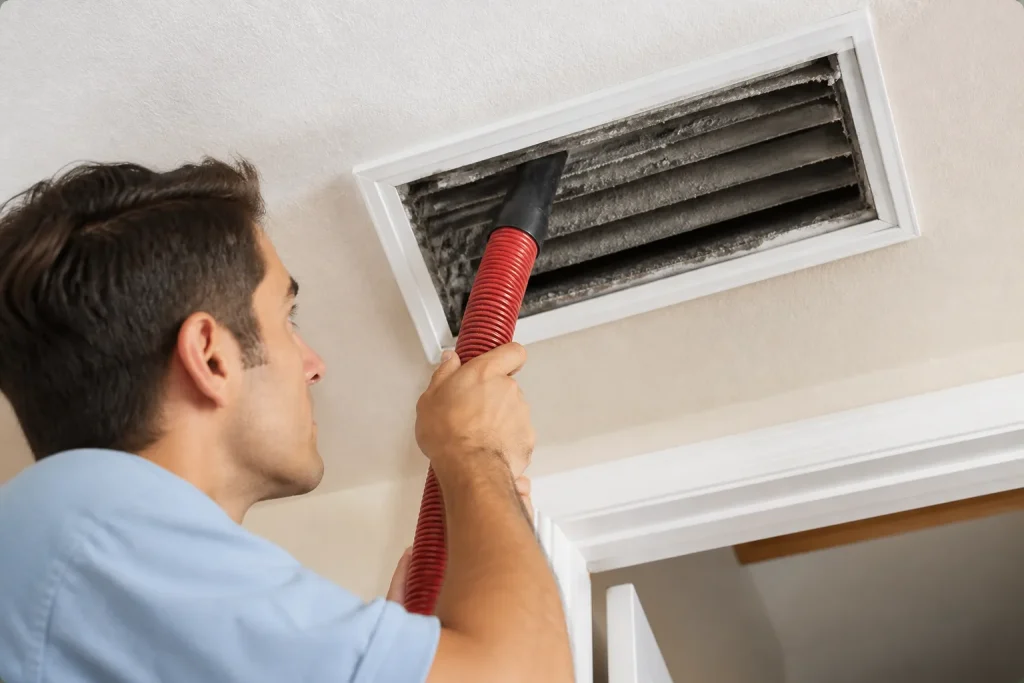
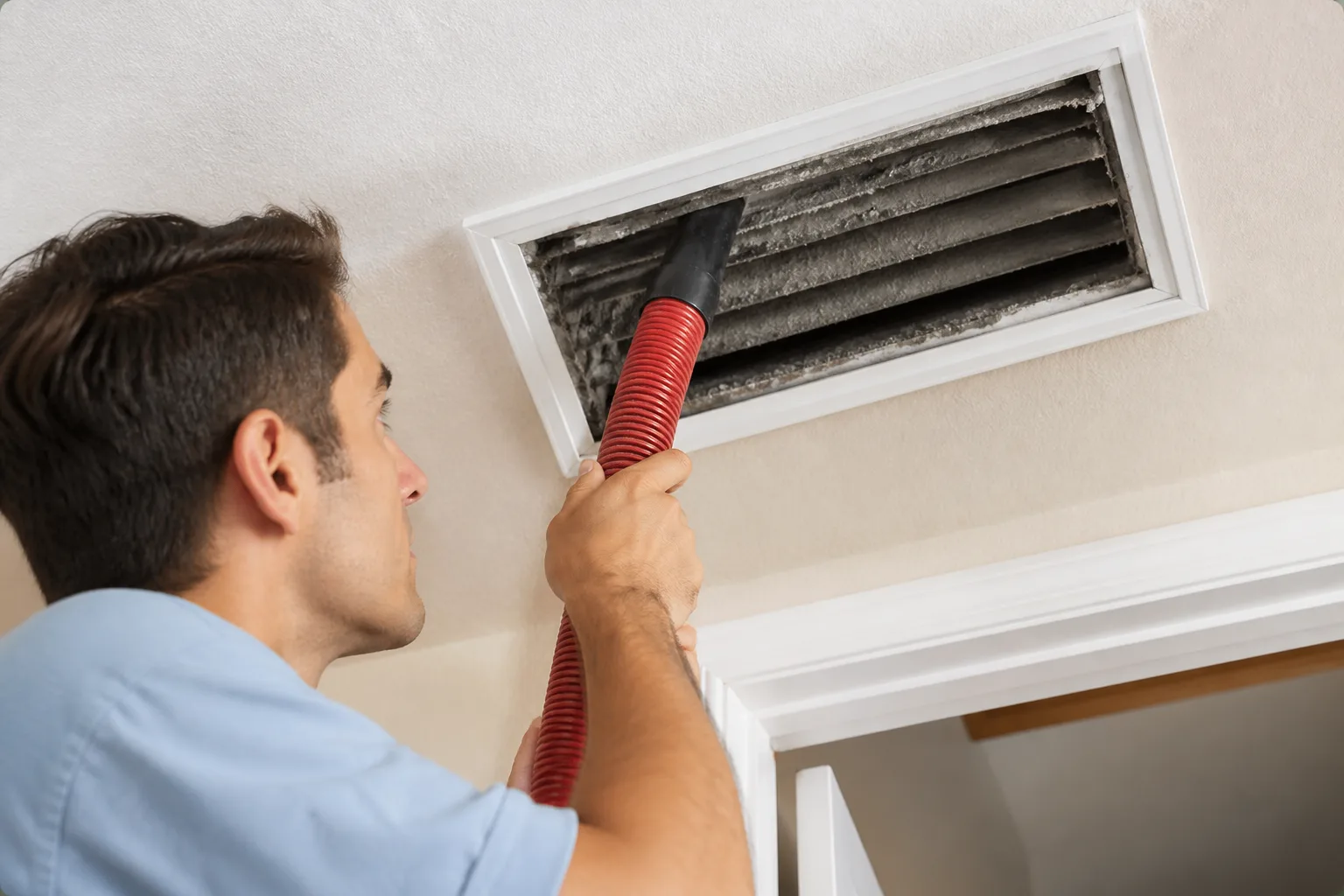
Because “dirty ducts” is a label, not a diagnosis. In our experience, most homes in Bustleton that suspect their ducts have one specific problem, and it isn’t always the ducts themselves. A register that sifts dust every morning is a different case from a blower compartment that’s coated in grime. One calls for professional-grade extraction of the duct interior. The other calls for cleaning the equipment that moves the air.
Here’s how to tell them apart by location and dust texture:
- Dust on or around the supply registers: fine, gray, powdery, and it reappears within days of wiping. This points to debris inside the duct shedding particles into the airstream. A Rotobrush or Nikro system with a contained extraction setup is what removes that material rather than just loosening it.
- Dust near the blower wheel and indoor unit: often darker, slightly greasy or sticky, and concentrated around the cabinet seams. That’s equipment-side contamination. Cleaning the ducts won’t fix it; the coil and blower housing need attention.
- Dust on the return grille only, with a heavy buildup along the filter edge: this usually means filter bypass. Air is slipping around the filter frame rather than through the media, so dust gets past it. A Honeywell or Aprilaire filter cabinet sized and seated correctly solves more of that than another cleaning would.
Same complaint, three separate fixes. If the diagnosis is wrong, the service call is wasted and the dust comes back.
Uneven Room Temperatures: Duct Sealing or Dirty Ducts?
Uneven room temperatures in a Bustleton home are more often a leaking or blocked duct problem than a dirt problem. Cleaning removes debris. It doesn’t close a gap at a joint or restore pressure to a run that’s been crushed. Before you book a cleaning for that upstairs bedroom that never quite catches up, figure out which issue you actually have.
A quick way to separate them:
- Feel the airflow at the register. Weak but steady, with another room getting plenty, suggests a blocked or undersized run. Weak and dusty points more toward debris.
- Look at the visible duct joints. Torn insulation, gaps at seams, or duct tape peeling away are sealing problems. Sealed ducts hold pressure. Leaky ones bleed it into the attic or crawlspace.
- Check whether the temperature gap is seasonal. If one room is always off by several degrees, that’s a balance issue. If it got worse recently, look at recent work or a collapsed flex run.
This is why we do duct repair and sealing as well as cleaning. When a technician finds a leak or a disconnected run mid-visit, fixing it on the spot turns a maintenance appointment into a real performance improvement. You don’t need a second company to come back and finish the job.
What Do Different Odors Really Tell You?
Odor is the most useful clue homeowners have, because it narrows down where the problem lives before anyone opens a panel. But the type of smell matters, and not every smell is a duct smell.
- Musty, damp, or earthy: points toward microbial growth near the evaporator coil. Moisture sits on the coil during cooling season, and growth there sends a damp smell through every supply register in Bustleton. Duct cleaning alone won’t solve it. Air quality sanitizing at the coil and along the system is the step that addresses the source.
- Sharp, ammonia-like, or a smell of droppings: often rodent activity inside a duct run. This one calls for extraction and inspection, not a surface wipe-down. Contained equipment like Abatement Technologies units matters here because debris has to be captured, not blown around.
- Acrid, metallic, or like something burning: stop and get it checked. A smell that worsens with the heat on may be a heat exchanger or combustion issue, and that is not a duct cleaning problem. Turn the system off and have a qualified technician look at it.
If you’re unsure which description fits, say it out loud to the estimator. “Damp and earthy” and “sharp and chemical” lead to completely different visits.
Is a Longer HVAC Run Time Actually a Sign of Dirty Ducts?
Yes, and it’s one of the most honest indicators you have. Dirty ductwork adds resistance. When debris coats the inside of a run or builds up on the blower, the system pushes against more back-pressure, so it runs longer to move the same air and uses more energy doing it. If your system used to satisfy the thermostat in a certain time and now it doesn’t, that’s worth noting.
You can roughly estimate the cost without instruments. Compare this month’s usage to the same month last year, adjusting for weather. If the difference is small, a cleaning might not pay back quickly. If the gap is meaningful and run time has crept up, dirt is a reasonable suspect worth checking. A technician can measure static pressure and tell you whether the system is actually choking.
That’s why complete HVAC cleaning matters alongside duct work: the blower, coil, and cabinet have to be part of the picture. Cleaning ducts while leaving a grimy blower wheel in place solves half the problem and leaves the other half running longer than it should.
Post-Renovation Debris: Why It Needs Same-Week Attention
Drywall dust, insulation fibers, and construction particulate are not normal house dust. In a Bustleton home that just had a kitchen or bath torn up, the return side often pulls fine gypsum powder into the system within days. It coats the blower, clings to the coil, and settles along the duct runs.
What to look for:
- White or gray chalky film on register fins and inside the return grille. That’s drywall dust. It’s abrasive and it compacts.
- Fluffy pink, yellow, or green fibers caught on the blower wheel or along a flex run. That’s insulation. It can reduce airflow quickly.
- Sawdust, drywall chunks, or ceiling dust sitting undisturbed in the lower return. Heavy construction particulate settles and can burn out a blower motor over time.
Schedule air duct cleaning as soon as the dust-heavy phase of the work ends, before the system cycles it around the house for another few weeks. Contained extraction with professional-grade equipment captures this material instead of resuspending it into the bedrooms.
When Should You Call a Pro?
Call when a symptom is specific and consistent. Dust that returns within days after wiping. One room that never matches the rest. A musty smell that gets stronger when the air conditioning runs. Run time that has clearly climbed. Debris from a renovation that’s already reached the return grille. Any one of those justifies an inspection, and the estimate is free.
A word on safety: if a smell smells like burning, or you see scorch marks near the indoor unit, shut the system off and have a qualified technician look at it before anything else. Electrical and combustion components are not a do-it-yourself inspection. Cleaning ducts won’t fix a failing heat exchanger, and it shouldn’t be asked to.
We answer 24/7. Fast dispatch from 7am to 7pm, Sunday through Friday. Call (833) 509-5322.
Related services in Bustleton
The full system covers more than ducts. Lint buildup in a dryer vent cleaning visit is a fire risk most people never see until it’s a problem, and it’s worth bundling with a duct appointment. One call covers the whole system, from return grille to dryer vent to sanitizing step.
The Bottom Line
Dirty-duct signs aren’t one signal, they’re a set of separate ones, and reading them correctly saves you from repeat appointments that never fix the real issue. Register dust, blower-area grime, and return-side bypass are three different problems. Uneven temperatures usually point to sealing or blockage. Odor narrows down the location better than any visual inspection. And construction dust is a genuine urgency, not a someday item.
Our technicians have up to 9 years of experience reading exactly these patterns. We use professional-grade equipment from Rotobrush, Nikro, and Abatement Technologies, work with Honeywell, Aprilaire, and Guardsman products, and handle cleaning, repair, sealing, and sanitizing in a single visit. The local pro is licensed and insured as their state requires, and you get a written estimate before any work begins.
If you’re in Bustleton and need help, Air Duct Cleaning Bustleton offers free estimates. Call (833) 509-5322. We answer 24/7. Fast dispatch from 7am to 7pm, Sunday through Friday.
Frequently Asked Questions
Most homes in Bustleton can go several years between cleanings if the filter is changed on schedule and there’s no renovation, water event, or pest issue. Homes with pets, allergies, recent construction, or a system that’s never been cleaned benefit from a shorter interval. The honest answer is that duct cleaning should follow symptoms and events, not a fixed calendar. Call (833) 509-5322 for an assessment of your specific system.
Ask for before-and-after photos of your own ducts, taken at the same points. A credible company shows you what came out and what the interior looks like afterward. Ask what equipment will be used too. Rotobrush, Nikro, and Abatement Technologies gear is standard for professional remediation work, and the technician should be able to name it. If a crew can’t tell you what they’ll use or show you photos, that’s a red flag. Call (833) 509-5322 for a clear explanation of our process.
Cheap quotes usually cover a partial job: no blower or coil cleaning, no sanitizing, no contained extraction, and no repair capability if a leak turns up. That’s how a low price becomes a second visit or a bigger invoice. We price per system by written estimate, agreed before work starts, so the number you see is the number you pay. Call (833) 509-5322 to get an honest range for your home.
Dust, pollen, pet dander, and construction particulate that collect in ducts can get recirculated through the home each time the system runs. That can aggravate symptoms for sensitive people, though it’s not the only cause and we won’t overstate it. Air quality sanitizing as a dedicated step addresses microbial and allergen concerns that basic debris removal leaves behind. Call (833) 509-5322 to talk through what your system actually needs.
Written by the team at Air Duct Cleaning Bustleton.
Need Air Duct Cleaning Help?
Call Air Duct Cleaning Bustleton - the local pro we connect you with is licensed and insured, with free written estimates in Bustleton.
(833) 509-5322