
Last updated November 25, 2026
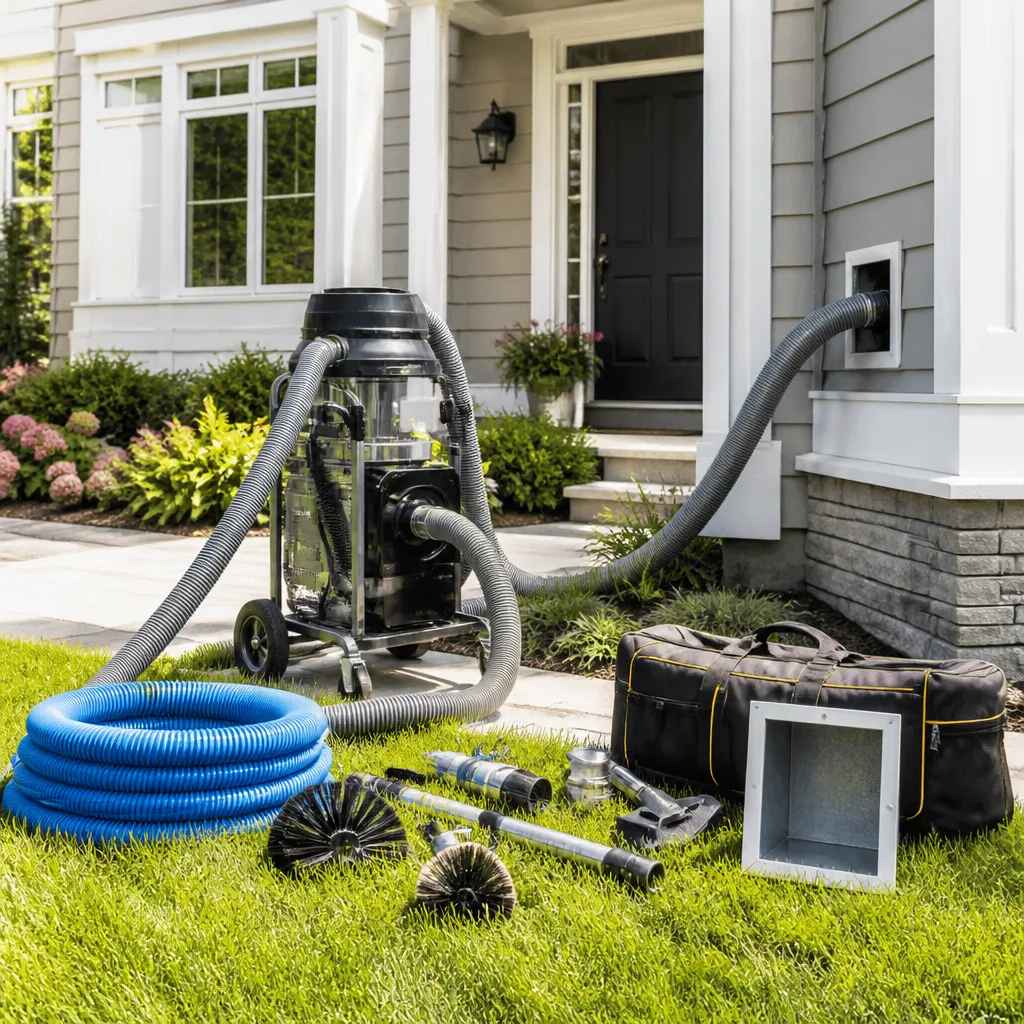 Whole-home duct cleaning
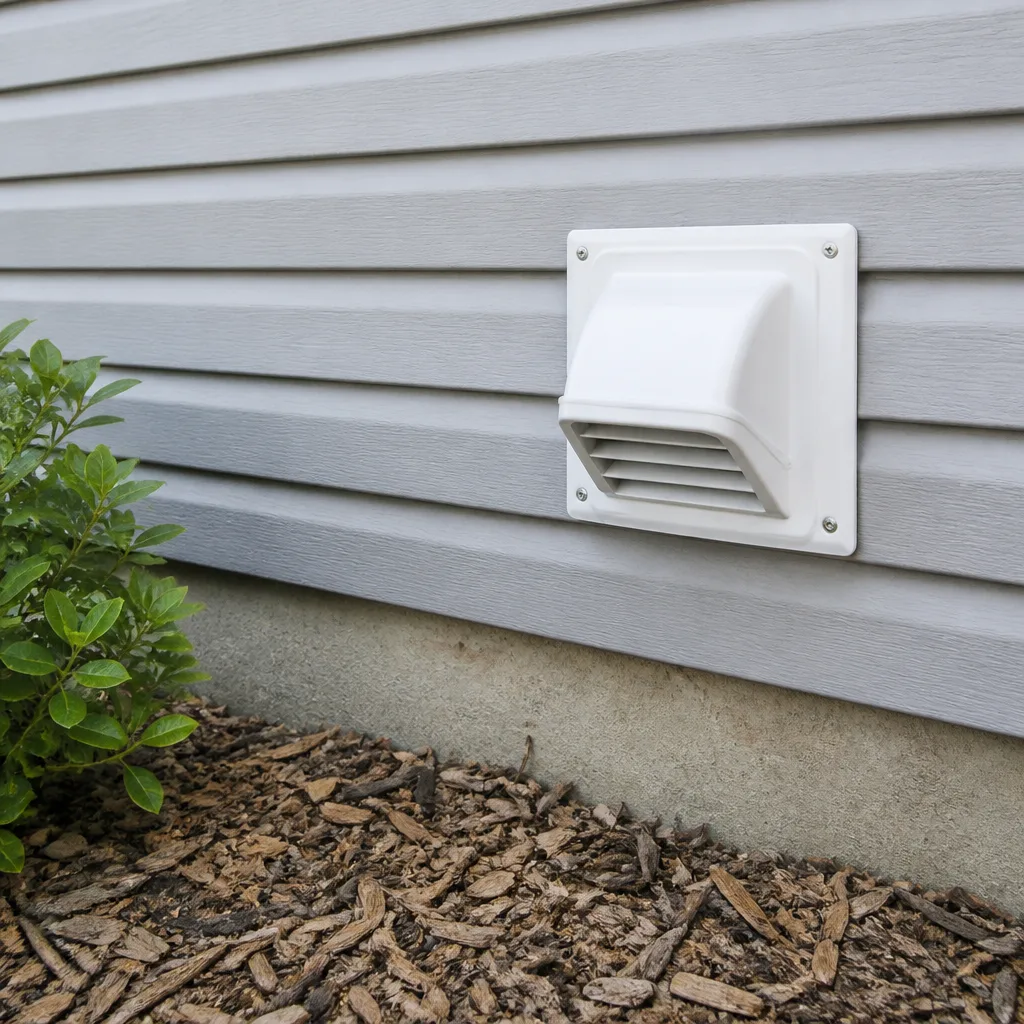 Dryer vent cleaning
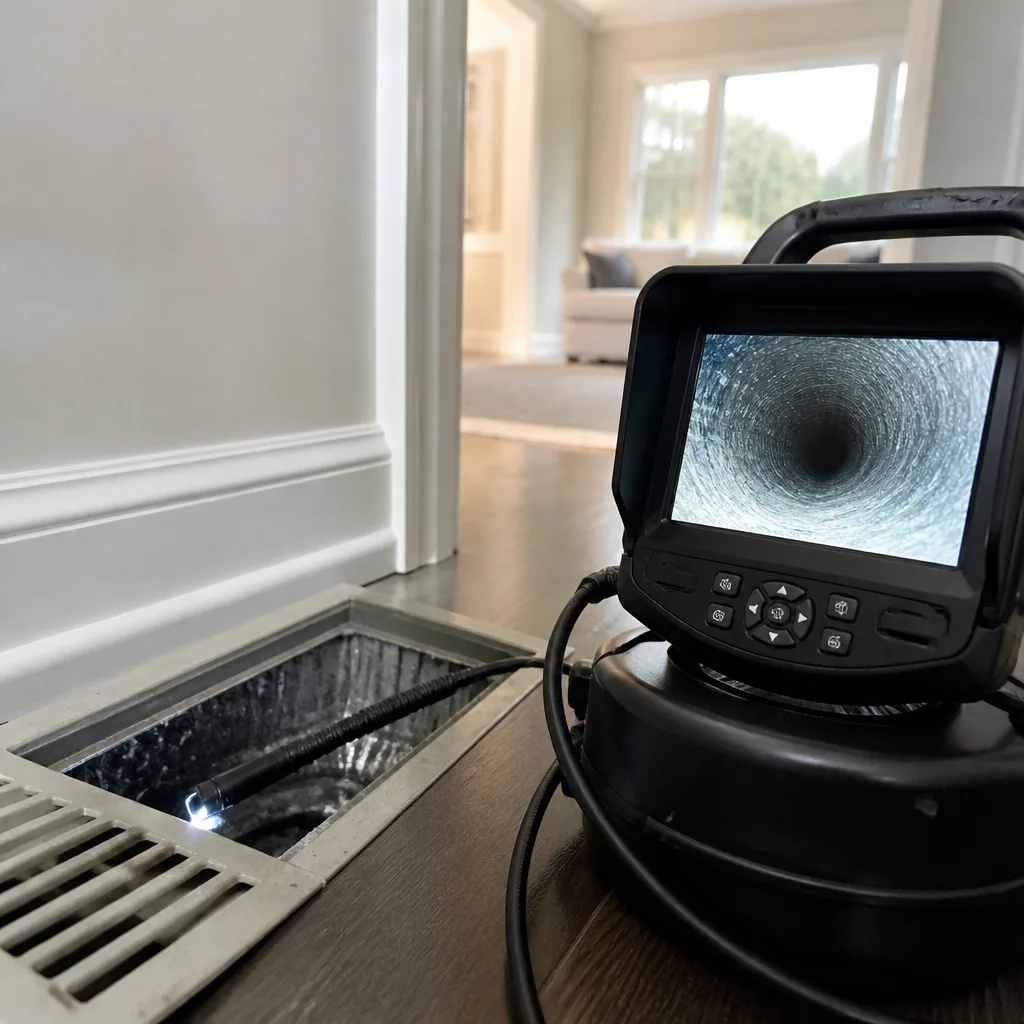 Camera inspection
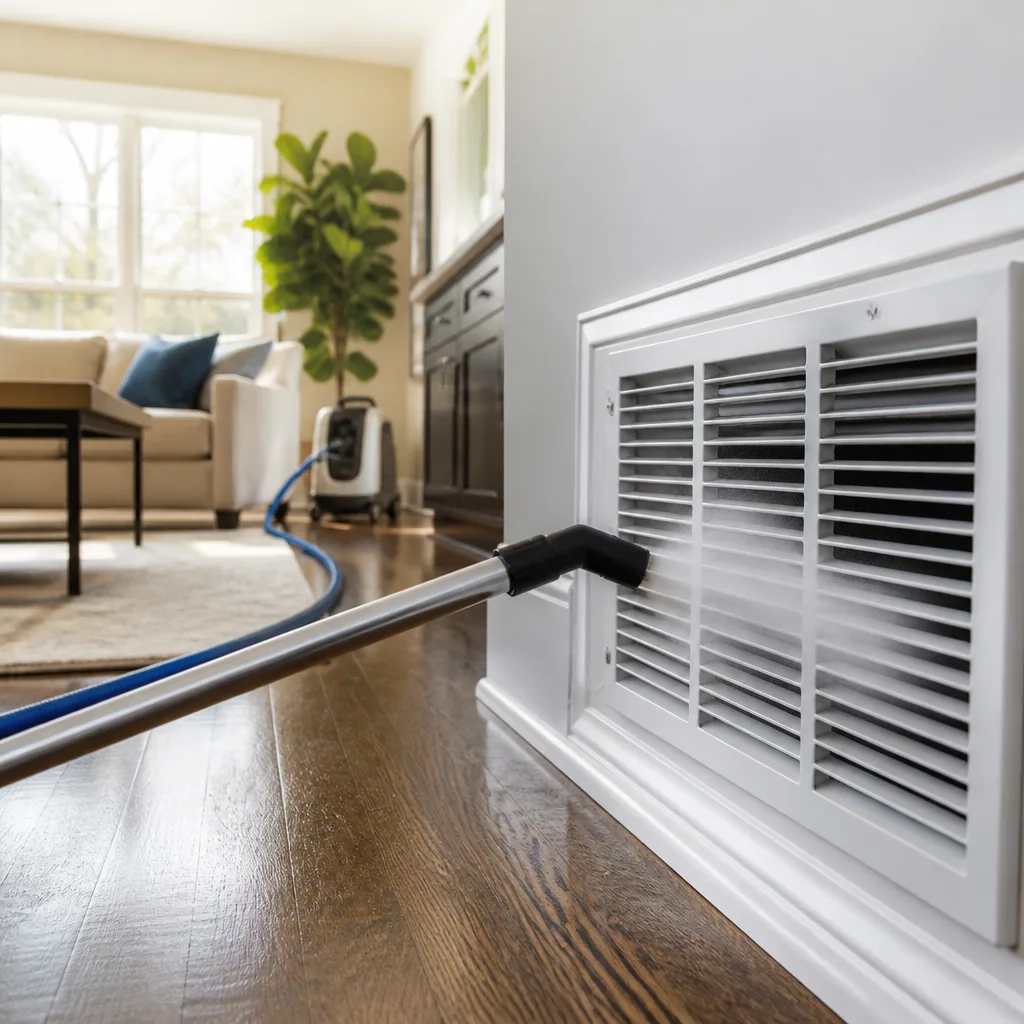 Sanitizing & deodorizing
Whole-system duct and dryer vent check with before-and-after photos - you see exactly what came out of your vents
That "$99 whole-house special" is a bait ad - the real number appears once they are in your hallway, or the "clean" is a shop-vac at the register. We photograph the inside of your ducts before and after instead.
Air Duct Cleaning Warning Signs: A Bustleton Homeowner’s Reference Guide
Most signs that your ducts need attention aren’t dramatic. Nobody’s furnace usually announces a problem. What happens instead is quieter: a gray shadow creeps across the ceiling paint above a supply register, a filter that used to last a season starts clogging in weeks, or the back bedroom drifts two degrees colder than the rest of the house every winter. Homeowners in Bustleton tend to file these under “old house quirks” or blame the thermostat. In our experience, those subtle patterns are exactly what your HVAC system uses to tell you the ductwork is working against it. This guide covers what to look for, what each warning sign actually points to, and how to tell the difference between a duct problem that cleaning will solve and a mechanical issue that needs a technician. It’s written from Bustleton, for Bustleton, where the housing stock and the seasons both shape how these problems show up.
Quick Answer
The main warning signs that air ducts need cleaning in Bustleton are visible dust shadows around supply registers, filters that load up faster than normal, a musty or burned-dust smell when the system runs, uneven room temperatures, and visible debris or mold at the register or grille. Any one of these is worth a look. Two or more together usually means the ductwork has been carrying more than it should for a long time, and a full-system inspection is the right next step.
Styles & brands we work with
- Whole-home duct cleaning
- Dryer vent cleaning
- Camera inspection
- Sanitizing & deodorizing
Table of Contents
- Register Dust Shadows: What Your Ceiling Is Telling You
- Filter Loading Speed as a Diagnostic Signal
- Reading Your Duct Smell Profile
- Uneven Room Temperatures and Restricted Branches
- When Cleaning Will Fix It, and When It Won’t
- Why Bustleton Homes Show These Signs More Than You’d Expect
- A Step-by-Step Inspection Checklist
- Rating the Severity of What You Find
Register Dust Shadows: What Your Ceiling Is Telling You
A dust shadow is the ring or halo of gray-brown staining that forms on the wall or ceiling around a supply register. If your supply registers are leaving those shadows on the ceiling paint, it means your ducts have been overloading your filter for months – the ceiling is telling you what the HVAC couldn’t. Shadows like this form for a specific reason, and where they sit tells you something about what’s going on inside the duct.
Every time the blower kicks on, air leaves the register at some velocity. If the ducts are clean and sealed, that air is filtered and moves evenly. If the ducts have accumulated dust, debris, or construction residue along the interior walls, the airstream picks some of it back up and carries it out. The velocity at the register face is highest right where the air hits the surrounding surface, so particles settle there first, and over time you get the shadow. It’s essentially a visible record of what’s been blowing out of that register every time the system ran.
Read the shadows this way:
- A single, faint halo around one register usually means local buildup in that branch run – often a short, poorly sealed run that dumps debris.
- Even halos around every register in the house points to a system-wide dust load and a filter that’s been overloaded for a long time.
- Streaking walls below a ceiling register means the register is picking up dust from the duct interior and pushing it against the wall – buildup is close to the register face.
- Dark rings along the register grille’s slots themselves suggest you’re seeing the interior dust directly, not just fallout.
Bustleton’s older row homes and twins have long, low-pressure duct runs that make this worse, especially in homes where an addition or renovation has extended a run or changed the layout. A shadow creeping back a week after you wipe it down is a clear sign there’s still an active source inside the duct.
Filter Loading Speed as a Diagnostic Signal
Most homeowners treat the filter as a maintenance item: replace it when it looks dirty. It’s more useful than that. How fast a filter loads up tells you a lot about what’s happening inside your ducts, and the change in that speed over time is often the earliest sign something is off.
A filter is a sentinel. It catches what the return system picks up. If your ducts are clean, the filter catches normal household dust, pet hair, and seasonal allergens at a steady rate. If your ducts are loaded, the filter has to catch everything the ducts slough off in addition to normal dust. That’s why the speed picks up.
Pay attention to these patterns:
- Notice the baseline first. Note how many weeks your filter normally lasts before it looks gray and matted. That’s your baseline.
- Watch for a change. If a filter that used to go a full season now loads in half that time, that’s a signal. It’s the rate change that matters, not the filter itself.
- Look at what the filter is collecting. Fine gray dust is normal. Fibrous debris, dark soot-like dust, or visible construction particles from a nearby renovation points to something more specific.
- Check the filter on both sides. A filter that has dust on the intake side but clean pleats on the outlet side is catching everything before it reaches the system – good. A filter that looks uniformly loaded from the edges in suggests the return system itself has debris in it.
- Compare rooms. If bedroom filters load faster than common-area filters, the branch feeding those rooms is likely the one that needs attention.
There’s a common mistake here: upgrading to a higher MERV filter to “catch more.” That’s sometimes the wrong call. A high-MERV filter on a system with dirty, restrictive ductwork can worsen airflow, not improve it. We work with Honeywell and Aprilaire filtration products because the right filter is matched to the system, not just chosen for a higher number.
Reading Your Duct Smell Profile
Duct contaminants have a smell, and the smell tells you something. A musty smell when the system kicks on is different from a burned-dust smell, which is different again from a sharp biological odor. Getting the profile right helps you decide what kind of service is actually needed – cleaning alone, sanitizing, or a repair.
Here’s how to read the profiles:
- Musty, damp-earth smell. Usually points to moisture in the system – condensation on a duct run in a cool basement, a leaking connection, or a humid crawlspace. Musty smells in ducts often mean there’s mold or mildew growth somewhere in the run, or the system is pulling humid basement air into the supply path. In Bustleton homes with unconditioned basements, this is the most common profile.
- Burned-dust smell. A hot, dry, slightly metallic smell when the heat first runs is often dust burning off heat exchanger surfaces or the first dust charge coming through warm ducts after a dry spell. If it lingers past a few minutes of runtime, it points to accumulated dust on the heat exchanger itself, which is an HVAC cleaning issue rather than a duct cleaning one.
- Sharp, sour, or biological odor. This one is worth taking seriously. It can indicate biological growth in a wet section of ducting or a pest issue. It needs an on-site look, not guesswork.
- Chemical or plastic smell. Not a typical duct issue. If you smell burning plastic or a chemical solvent odor, turn the system off and call a technician – that’s a mechanical or electrical concern, not a cleaning one.
A quick test: run a clean paper towel over the register face after the system has been blowing for ten minutes. If the towel picks up fine gray dust, that’s normal. If it picks up a dark smear or a fibrous layer, the ducts are actively shedding debris. If it picks up a visible organic or greasy residue, sanitizing and cleaning together are usually the right response. Our Air Duct Cleaning Bustleton team can walk you through what we’re seeing at the register front.
Uneven Room Temperatures and Restricted Branches
One of the most misdiagnosed warning signs in a Bustleton home is uneven room temperature. If the front room runs warm while the back bedroom is cold, or the upstairs stays noticeably hotter than the downstairs in summer, the usual assumption is a thermostat issue or a bad HVAC system. Very often, the real cause is a restricted duct branch that’s starving one part of the house for airflow.
The physics are simple enough. A duct system is a distribution network. The blower moves a fixed volume of air, and that volume has to reach every register at roughly the right pressure. If one branch is clogged with dust and debris, or if a leak is bleeding air into a wall cavity before the register, the system pushes the same total volume but with less reaching the affected rooms. Rooms near the blower get more air than they should, distant rooms get less. You get the hot and cold pockets that look like a mechanical fault but are really an airflow problem.
This is where the “warning signs vs. mechanical issues” question starts to matter. Ask:
- Did the imbalance appear gradually, or suddenly? Gradual drift over years is a characteristic duct restriction pattern. Sudden onset points to a mechanical problem.
- Is the imbalance tied to a specific room or a specific branch? One affected room means a branch restriction. Half the house affected means a larger issue, often the main trunk or a major branch.
- Does the problem change with the season? In Bustleton, homes tend to show duct restriction most clearly during the first cold snap, when the heating load goes up and the system needs full airflow to keep up.
- Is airflow weak at a specific register even when the blower is running hard? That’s a register-level airflow symptom. Weak airflow at a register can mean an obstruction upstream of that register, a leak in a duct run that’s bleeding pressure, or a damper set wrong.
We can usually tell from the pattern alone whether cleaning is the right first step or whether the system should be looked at by an HVAC technician before any cleaning happens. That’s the value of a full-system inspection over a quick blast-and-go cleaning job.
When Cleaning Will Fix It, and When It Won’t
Not every warning sign means the ducts needed cleaning. Some point to a mechanical HVAC problem that no amount of duct cleaning will fix. Knowing which is which saves money and time, and it’s the difference between a company that comes out to vacuum ducts and one that actually diagnoses the problem.
Signs that point to ducts as the primary cause:
- Visible dust shadows at registers, especially multiple registers across the house
- Filter loading speed that’s increased noticeably over time
- Musty, dust-laden, or “old air” smell from supply registers
- Rooms whose temperatures drifted apart gradually
- Visible debris at register grilles or behind the return cover
- Recent renovation, drywall work, or a house that’s never had the ducts cleaned
- A dryer vent that’s slow to dry laundry or leaves lint on the exterior vent (that’s a dryer vent issue – see our dryer vent cleaning page)
Signs that cleaning alone won’t solve:
- Loud banging, screeching, or grinding when the blower starts – mechanical failure
- Burning plastic or electrical-burning smell
- Short cycling, where the system turns on and off rapidly
- A furnace or AC unit that won’t start or runs constantly with no temperature change
- Ice forming on refrigerant lines in summer
- Water pooling around the indoor unit
Some signs are in between. A loose duct connection, a sagging or crushed run, or a branch that’s been disconnected inside a wall cavity is a repair job, not just a cleaning job. That’s why our air duct cleaning service includes a duct repair and sealing capability. Clean, well-sealed ducts perform better than clean, leaky ones, and we’d rather fix the leak than hand you a clean system that’s still bleeding air into a wall.
Why Bustleton Homes Show These Signs More Than You’d Expect
Bustleton is a neighborhood that combines a lot of older housing stock with newer renovations, additions, and system replacements, and both sides of that pattern make duct problems show up more clearly. Older row homes and twins in the neighborhood often still carry original ductwork or ductwork that’s been patched and extended over multiple renovation projects. Each extension changes the system’s pressure balance and gives dust more places to collect.
The seasonal pattern here matters too. Bustleton homes run their heating systems long and hard through cold winters, which means ductwork that’s loaded with dust gets pushed through a full heating cycle before the next season’s maintenance. The first cold nights of the year are typically when homeowners first notice uneven temperatures and dust shadows, because that’s when the system goes from light summer duty to a full heating load. Then summer comes and the AC compresses everything through the same duct path.
Basements are the quiet contributor. Many Bustleton homes have basements that see seasonal damp, and basement return ducts running through humid space can pull that moisture into the system. That contributes to the musty smell profile and, in enough moisture, to the biological one. A single-visit inspection that covers the basement runs, the main trunk, the upper-floor branches, and the dryer vent side of the system usually catches the cause.
What helps is the right gear. We bring Rotobrush and Nikro systems because they’re built for real duct interiors rather than consumer surface clearing, and Abatement Technologies equipment for controlled debris extraction during the work. That’s what “professional-grade equipment, not consumer shortcuts” means in practice – contained, controlled removal, and before-and-after photos of what the ducts actually looked like inside.
A Step-by-Step Inspection Checklist
You can run most of this walkthrough yourself before you call anyone. Take notes as you go, and note which rooms or registers each finding applies to. The pattern matters more than any single item.
- Walk every room with a supply register. Look for dust shadows on the wall or ceiling around each register. Note which registers show them and how strong.
- Inspect the register faces. Look inside the grille with a flashlight. Visible dust film is normal. Visible debris, matted lint, or dark organic growth is worth flagging.
- Check every filter over a month. Note the load rate. Compare against the baseline you remembered. If a filter that lasted three months now lasts six weeks, write it down.
- Run a smell test. On the first cycle of the day, note the smell from the return grille and from each supply. Musty, burned-dust, and biological smells get separate notes.
- Take temperatures in each room. A simple thermostat reading or wall thermometer in each room, taken at the same time of day, gives you a temperature map. Differences of a few degrees room to room are common. Differences of five or more point to a restricted branch.
- Check the return grilles on the wall or in the floor. A return grille that looks visibly dusty or has fibrous debris visible is worth flagging for cleaning.
- Inspect the dryer vent exterior flap. If the flap doesn’t open fully during a cycle, or you see lint accumulation around the exterior opening, the vent run needs cleaning.
- Note any renovation history. Any drywall work, insulation work, or major painting in the last year should be noted. Renovation dust is one of the most common duct-loading causes.
When you call with notes, you’ll get an accurate estimate on the first conversation instead of a technician having to discover the problem on site. Our HVAC cleaning work often begins with the same checklist, just conducted with better instruments.
Rating the Severity of What You Find
Not every finding is urgent. It helps to know which findings are worth scheduling now, which can wait, and which mean you should stop using the system until someone looks at it. A practical severity scale:
| Finding | Severity | What it usually means |
|---|---|---|
| Faint dust shadow at one register | Low | Local branch buildup; schedule routine cleaning |
| Dust shadows at every register | Moderate | System-wide dust load; full cleaning is due |
| Filter loading rate has doubled | Moderate | Duets are shedding debris into the return system |
| Musty smell that persists | Moderate | Moisture in the duct path; cleaning plus sanitizing and a leak check |
| Room temperature spread of 5 degrees or more | Moderate | Restricted branch or duct leak; inspection needed |
| Visible debris at register faces | Moderate-High | Significant interior buildup close to the grille |
| Biological or sour smell | High | Growth or pest issue in the system; on-site inspection |
| Burned-dust smell that lingers past startup | High | Dust on the heat exchanger; HVAC cleaning is needed |
| Burning plastic, screeching, short cycling, ice buildup, water at the unit | Stop use | Mechanical problem – turn the system off and call an HVAC technician |
Costs in the Bustleton market generally track by whole-system scope rather than by vent count, and the written estimate sets the final price after the inspection. That’s the honest structure: what the ducts actually need determines the price, not a teaser figure.
Common Mistakes to Avoid
- Treating the filter as just a maintenance item. The filter is a diagnostic signal. If you only ever swap it without tracking the rate, you miss the earliest warning sign your ducts give you.
- Upgrading to a very high-MERV filter to “catch more.” Restricting airflow on a system with dirty ducts can make pressure problems worse. Match the filter to the system, not to a number.
- Confusing duct warning signs with mechanical problems. A screeching blower or a short-cycling system isn’t a cleaning problem, and calling a duct cleaner when the real issue is the furnace is a missed diagnosis. Get a technician in for genuine mechanical failures.
- Wiping down the ceiling shadow and calling it fixed. The shadow comes back because the source is inside the ducts. Cleaning the paint doesn’t clean the ducts – it just hides the evidence for a few weeks.
- Booking a duct-only cleaning when the dryer vent and HVAC components need attention too. The air pathway includes the ducts, the dryer vent, and the HVAC components. Splitting the work between two different companies usually means gaps in coverage between them.
- Ignoring the basement. Bustleton basements run cooler and more humid than the conditioned living space, and return ducts running through them pull that moisture into the system. A cleaning that skips the basement runs is incomplete.
- Trusting a quote that isn’t per-system. Per-vent pricing invites inflating the vent count on site. Ask for a written estimate per system, agreed before work starts.
See the difference
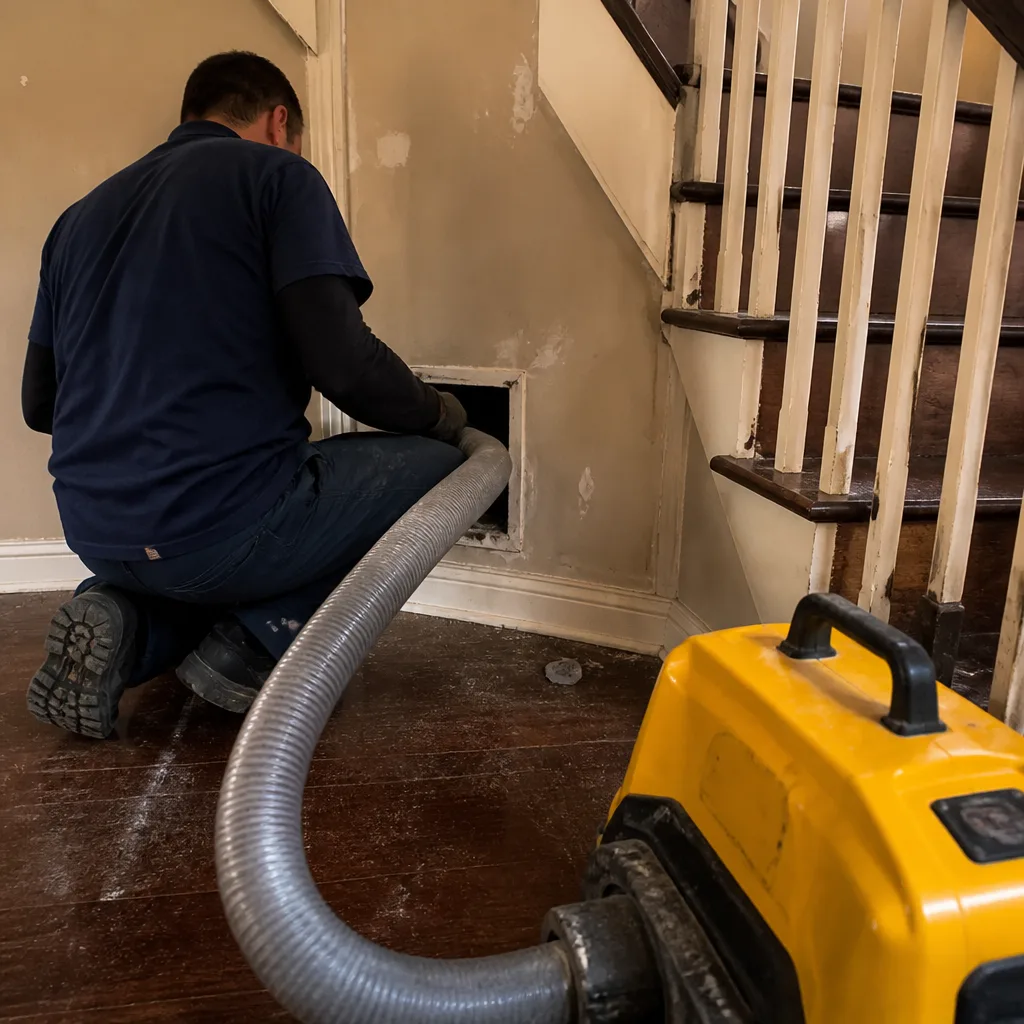 Before
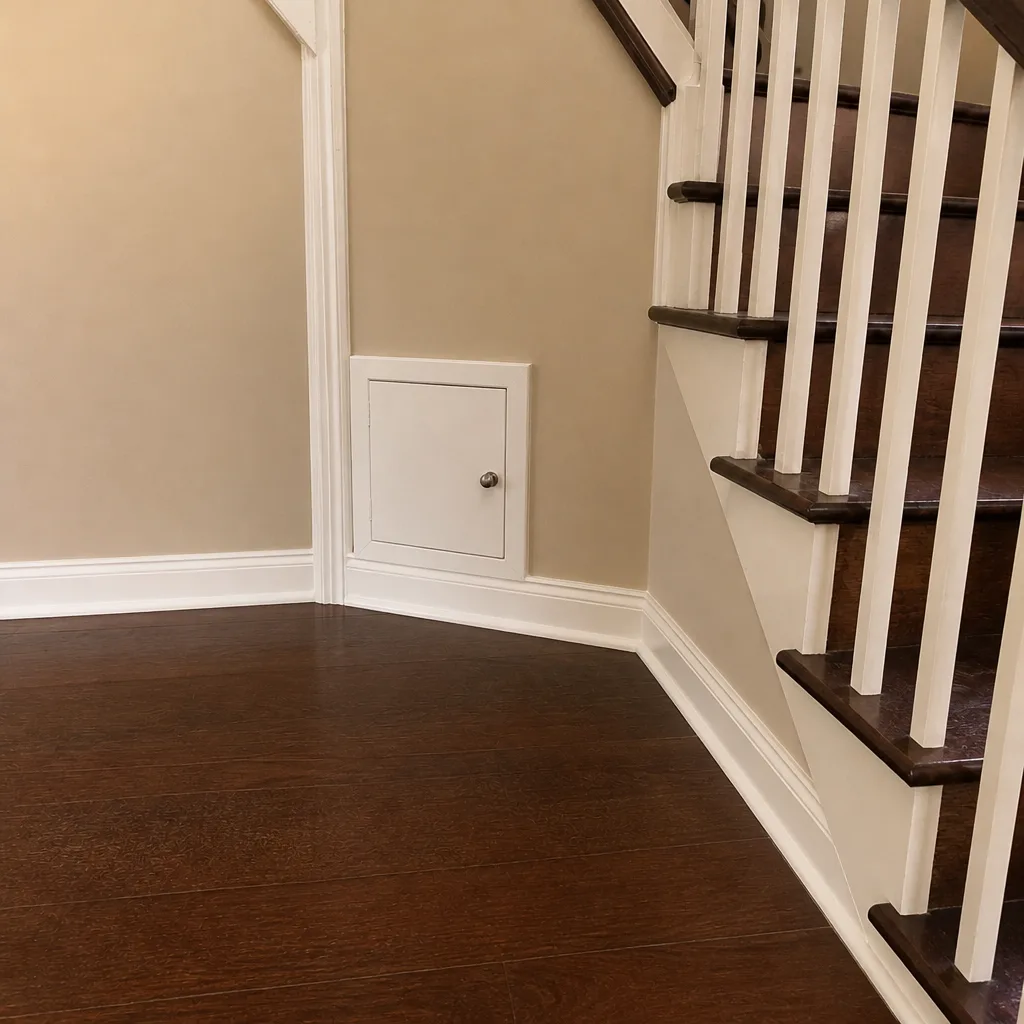 After
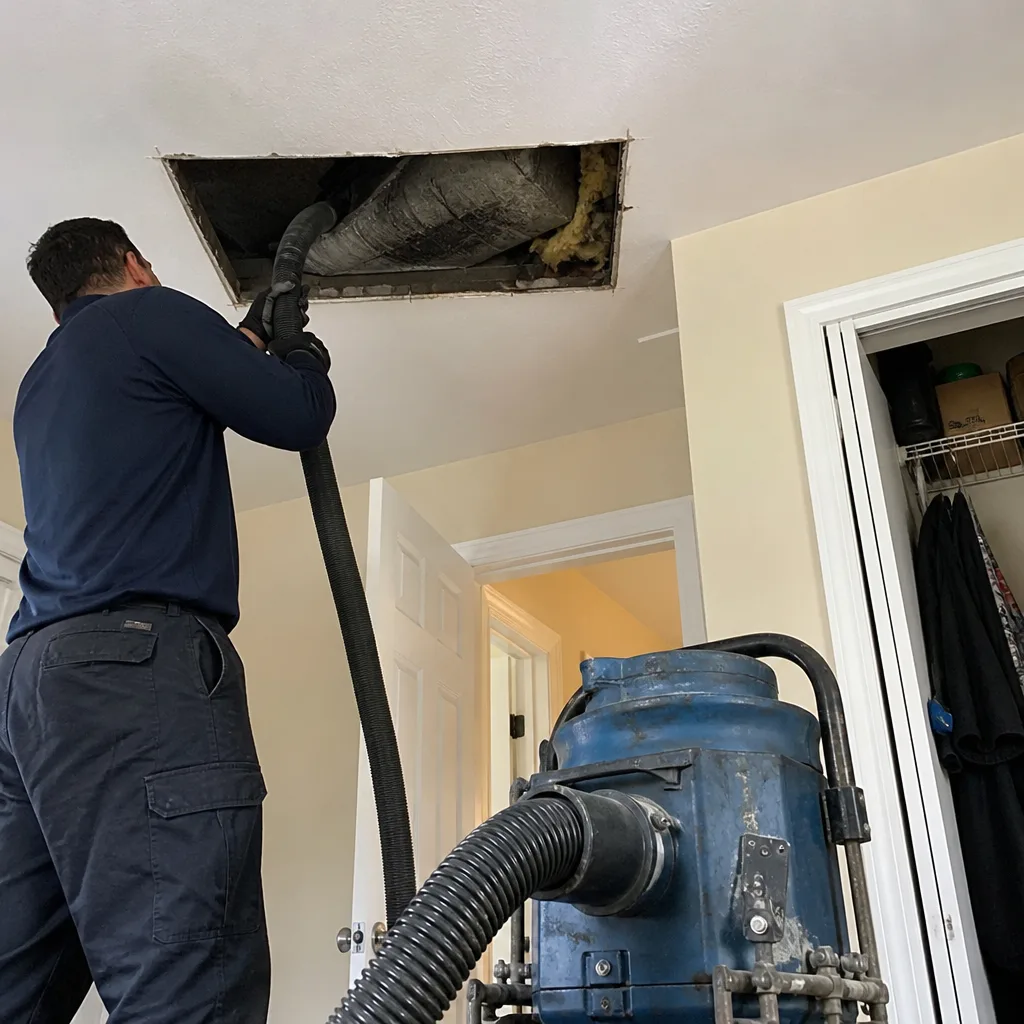 Before
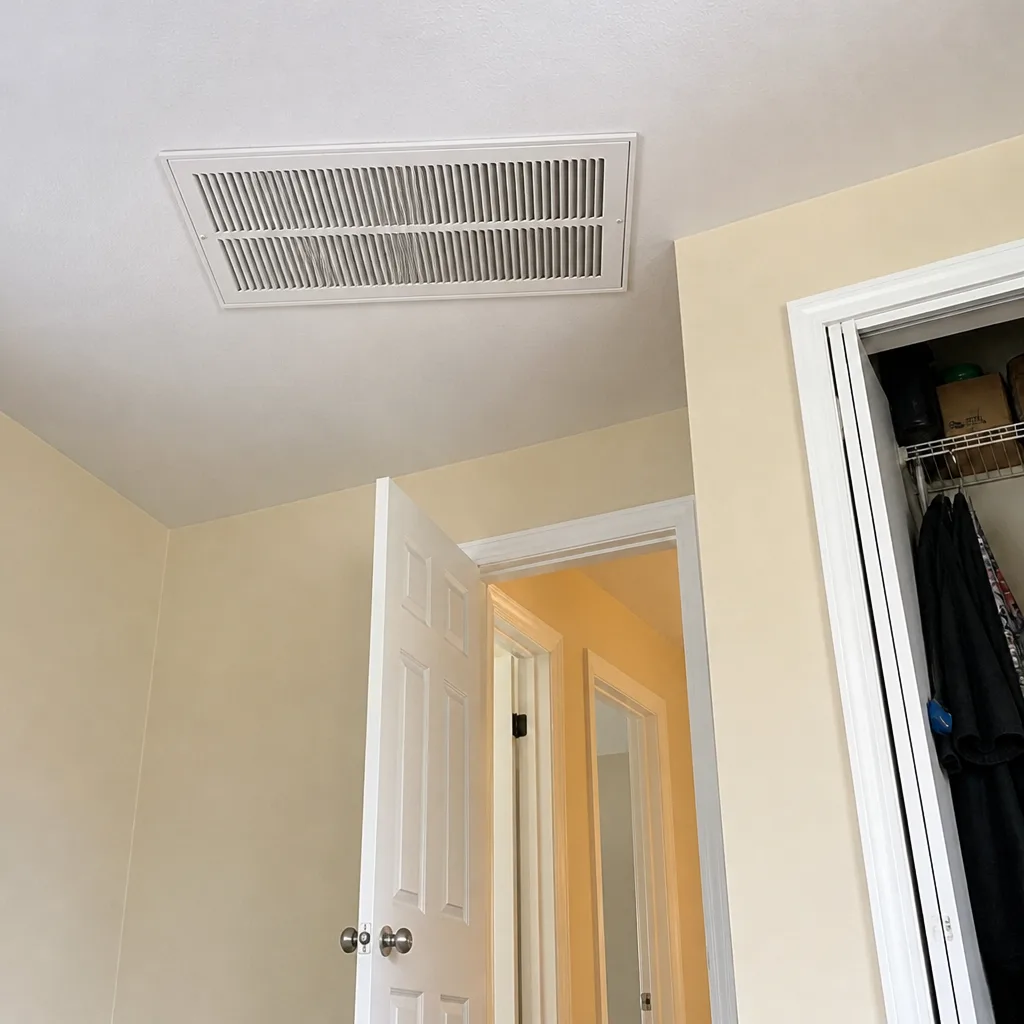 After
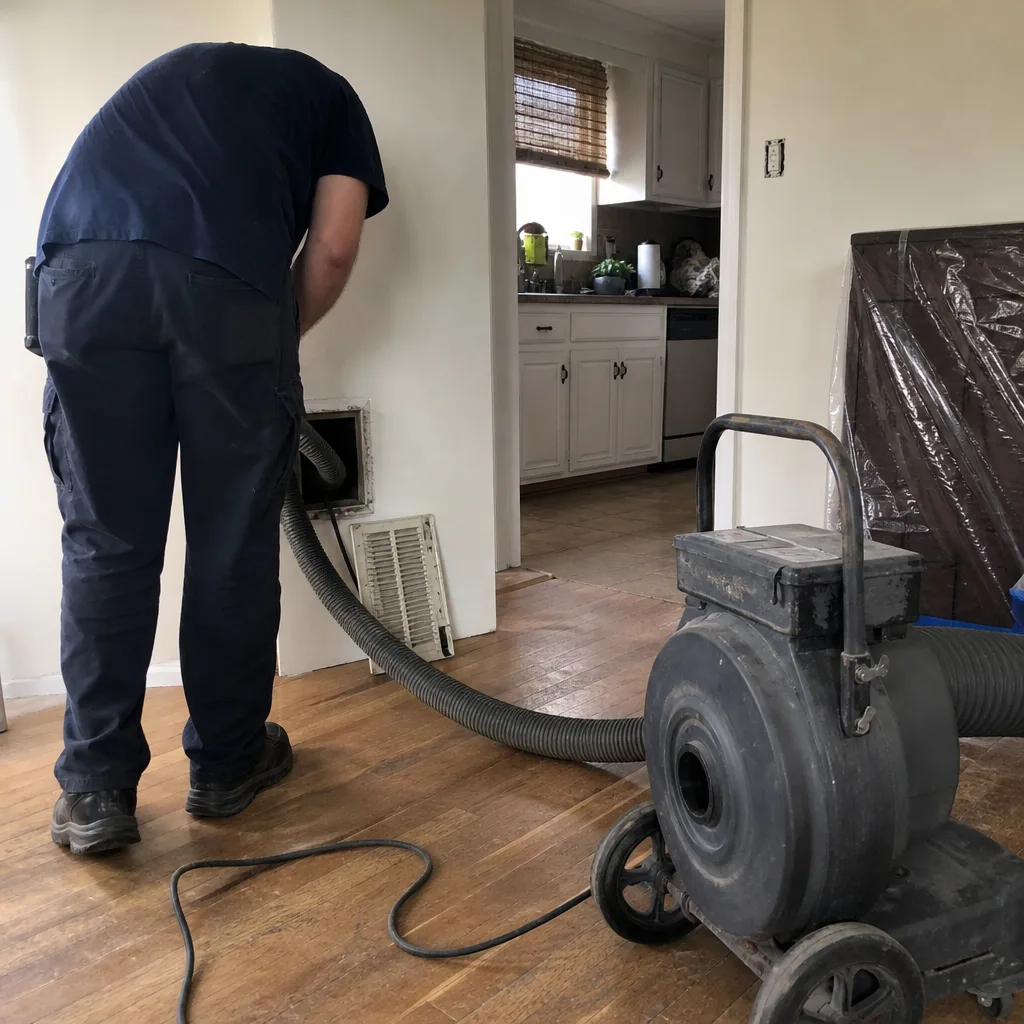 Before
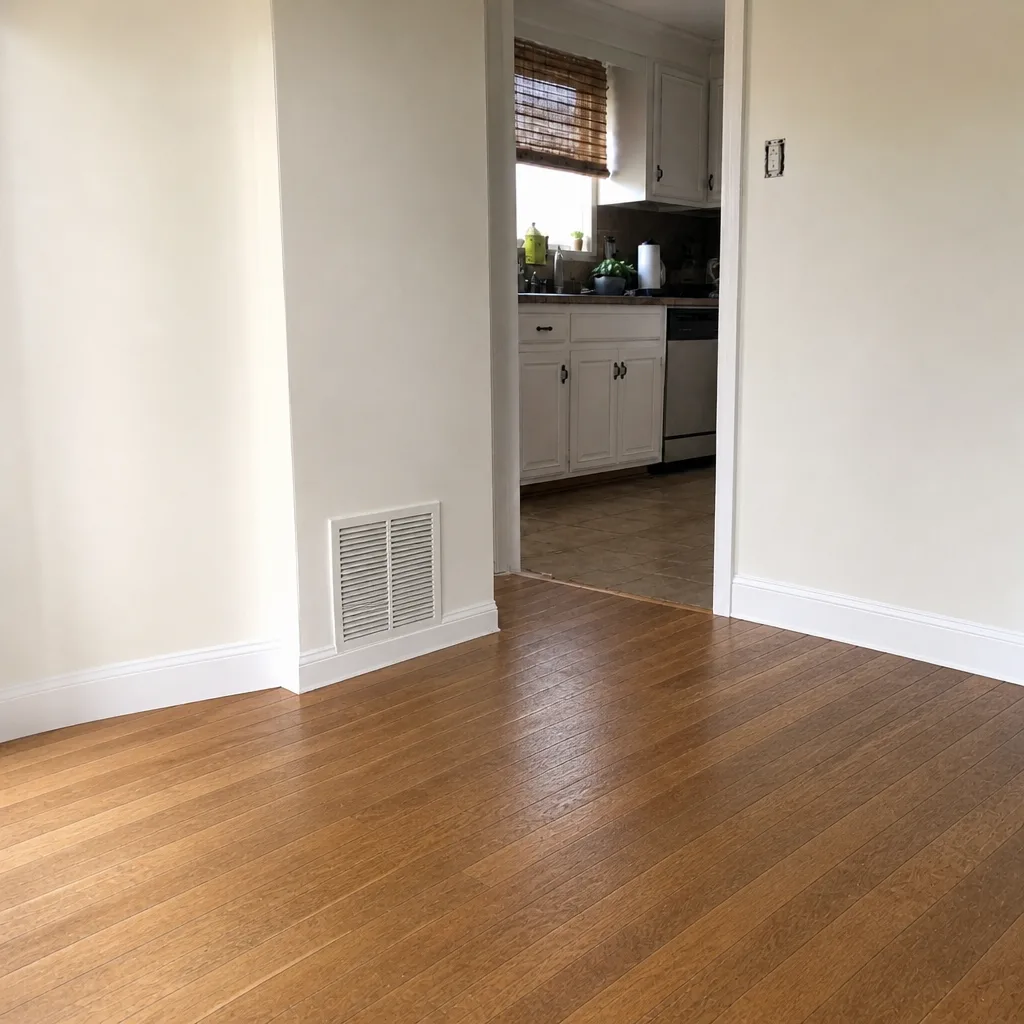 After
When to Call a Professional
Call a professional when any two of the warning signs on this page appear together, when you’ve found a biological or sour smell, or when a filter starts loading twice as fast as before. Also call if you’ve recently finished a renovation, or if you’ve moved into a Bustleton home and can’t confirm the ducts have ever been cleaned. Those cases usually need a full-system inspection rather than a spot clean. Mechanical symptoms – burning smells, screeching, water at the unit, ice on refrigerant lines – go to an HVAC technician, not a duct cleaner, and we’ll say so directly when that’s what we’re seeing.
Air Duct Cleaning Bustleton offers free estimates in Bustleton – call (833) 509-5322 for an exact quote. Fast dispatch from 7am to 7pm, Sunday through Friday. We work with Honeywell and Aprilaire filtration products, and with Guardman components where air quality sanitizing is part of the job.
Frequently Asked Questions
You need cleaning if two or more of the warning signs on this page are present: dust shadows at multiple registers, filter loading speed that’s increased, a persistent musty or dust smell, uneven room temperatures, or visible debris at register faces. A single faint shadow at one register is a lower priority. Call (833) 509-5322 for an exact quote – estimates are free.
Duct cleaning pricing in the Bustleton market is set by whole-system scope rather than per-vent count, and the exact number depends on how many branches need attention, whether the system needs sanitizing, and whether any duct repair and sealing is needed. We give one flat price per system, agreed before work starts. Call (833) 509-5322 for an exact quote – estimates are free.
Low quote prices are usually a teaser figure that grows once the technician is on site, or a sign of consumer-grade equipment that doesn’t reach the inside of real ductwork. What we quote is the whole-system price, agreed before any work begins, with before-and-after photos of your own ducts so you can see the work that was actually done. Call (833) 509-5322 for an exact quote – estimates are free.
We take before-and-after photos of your ducts so you’re looking at the actual runs in your own home, not stock images. That’s the honest way to verify the work. Ask any duct cleaning company you hire to show you the same. Call (833) 509-5322 for an exact quote – estimates are free.
Duct cleaning frequency depends on your home, not a fixed schedule. Homes with pets, recent renovations, allergies, or a never-cleaned system benefit most from a full cleaning, while homes with consistently clean filters and no warning signs can go longer between visits. Watch filter loading rate and register shadows as your guide. Call (833) 509-5322 for an exact quote – estimates are free.
Clean ducts often restore the airflow balance between branch runs, which can narrow the temperature spread between rooms. If the spread came on gradually, cleaning and a duct leak check can help. If it appeared suddenly, or the system is making mechanical noises, the temperature issue is probably not a duct cleaning problem. Call (833) 509-5322 for an exact quote – estimates are free.
The Bottom Line
Duct warning signs are usually subtle. Dust shadows on the paint around your supply registers, a filter that clogs faster than it used to, a smell profile that points to moisture or debris, uneven room temperatures that drift apart over years: these are all patterns, not emergencies. Read them as a pattern rather than a one-time event. One or two signs together means a full-system inspection is worth scheduling. A screech, a burning smell, or ice on the lines means a technician, not a cleaner. In Bustleton specifically, older housing stock, seasonal humidity swings, and older duct runs all make these signs show up more clearly than in newer construction. If what you’re seeing matches what’s on this page, the next step is a call. Call (833) 509-5322. We answer 24/7. Fast dispatch from 7am to 7pm, Sunday through Friday.
Written by the team at Air Duct Cleaning Bustleton.